PROJECT 03 — FULL STACK
TripCraft
A travel planning application — trips, destinations, itineraries, activities and budgets — with a proper React frontend backed by a Django API.
OVERVIEW
TripCraft is a travel planning application built with a React frontend and a Django backend, rather than a static UI — the intent from the start was a real frontend talking to a real API and database, not a mockup of a travel app.
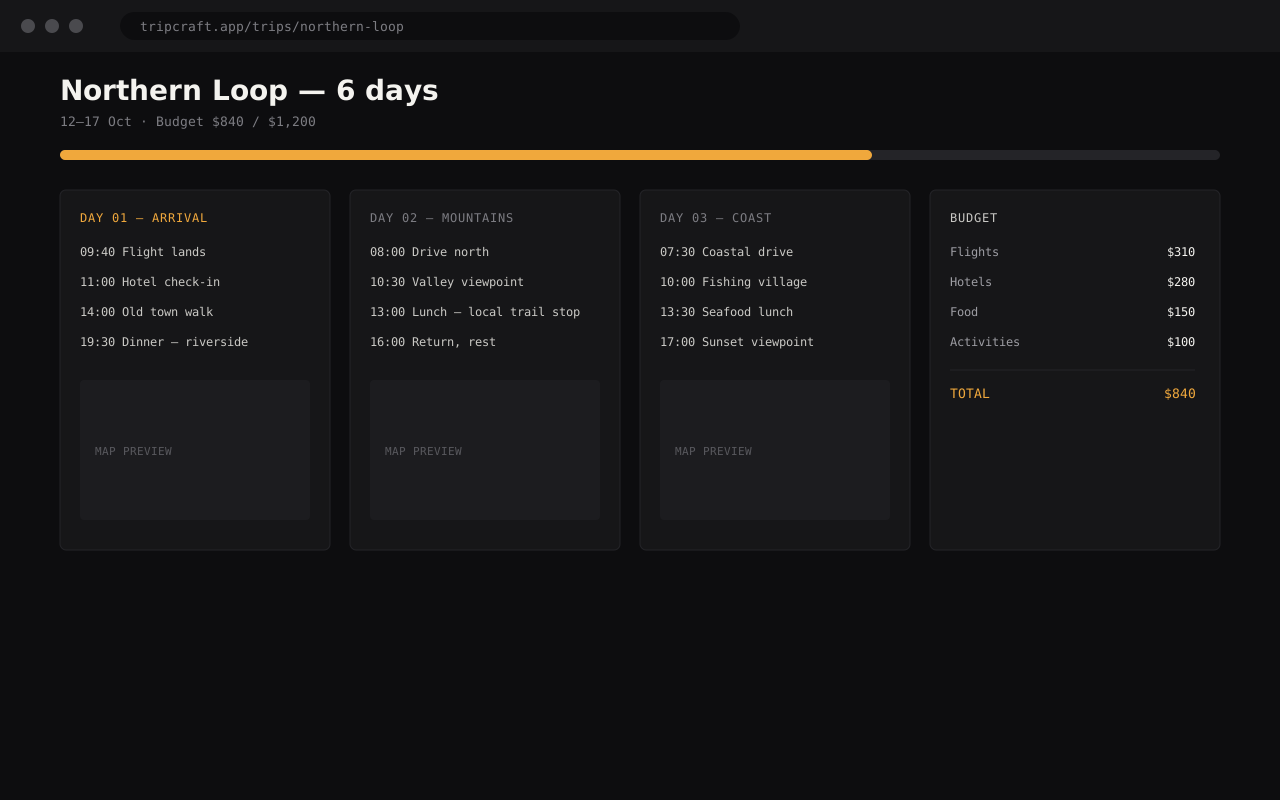
It's built around the parts of trip planning that actually take time: laying out destinations across days, keeping activities and notes attached to the right day, and tracking a budget alongside the plan.
THE IDEA
FEATURES
→Trip creation with date ranges
→Destinations attached to a trip
→Day-by-day itinerary planning
→Activities and notes per day
→Budget tracking alongside the plan
→React frontend built with Vite, talking to a Django API
TECHNOLOGY
ARCHITECTURE
The frontend is a React app built with Vite, calling a Django backend that exposes trips, destinations, itineraries and budgets as API resources rather than rendering everything server-side.
Keeping the frontend and backend as separate layers meant thinking through deployment for both — a production React build served alongside a Django API rather than one combined app.
CHALLENGES
WHAT I LEARNED
TripCraft's source is on GitHub, frontend and backend included.
VIEW ON GITHUB ↗